Shimokitazawa or Koenji from Ikebukuro: A Vintage Shopping Guide
Key takeaway
Shimokitazawa and Koenji are about 25 to 35 minutes from Ikebukuro with one transfer. This English guide compares their vintage stores, cafes, music culture, prices, opening times, and the best route for a relaxed Tokyo afternoon.
From Ikebukuro by train
About 25–35 minutes
Via Shibuya for Shimokitazawa or via Shinjuku for Koenji
One transfer
These neighborhoods are in different directions. Choose one for a half-day. Combining both is possible, but it creates extra train time and less time for browsing.
The Ikebukuro-base edit
Choose one neighborhood for serious shopping; combine both only when you want to compare their atmosphere rather than inspect every rack.
- Best for
- Vintage clothing, records, independent cafes, local night culture
- Suggested departure
- Leave Ikebukuro around 11:00
- Return shape
- Return around 19:00-21:00
- Honest trade-off
- Small shops open late, close irregularly, and reward slow browsing more than checklist sightseeing.
Why this route works from Ikebukuro
Shimokitazawa is stronger for a broad first browse; Koenji feels denser and more local. Put your higher-priority neighborhood first and treat the second as an optional evening extension.
Editorial note: this is a practical route judgment, not an operator timetable. Train and facility details are checked against the official links in this guide; always confirm same-day conditions.
Choose the neighborhood that matches your style
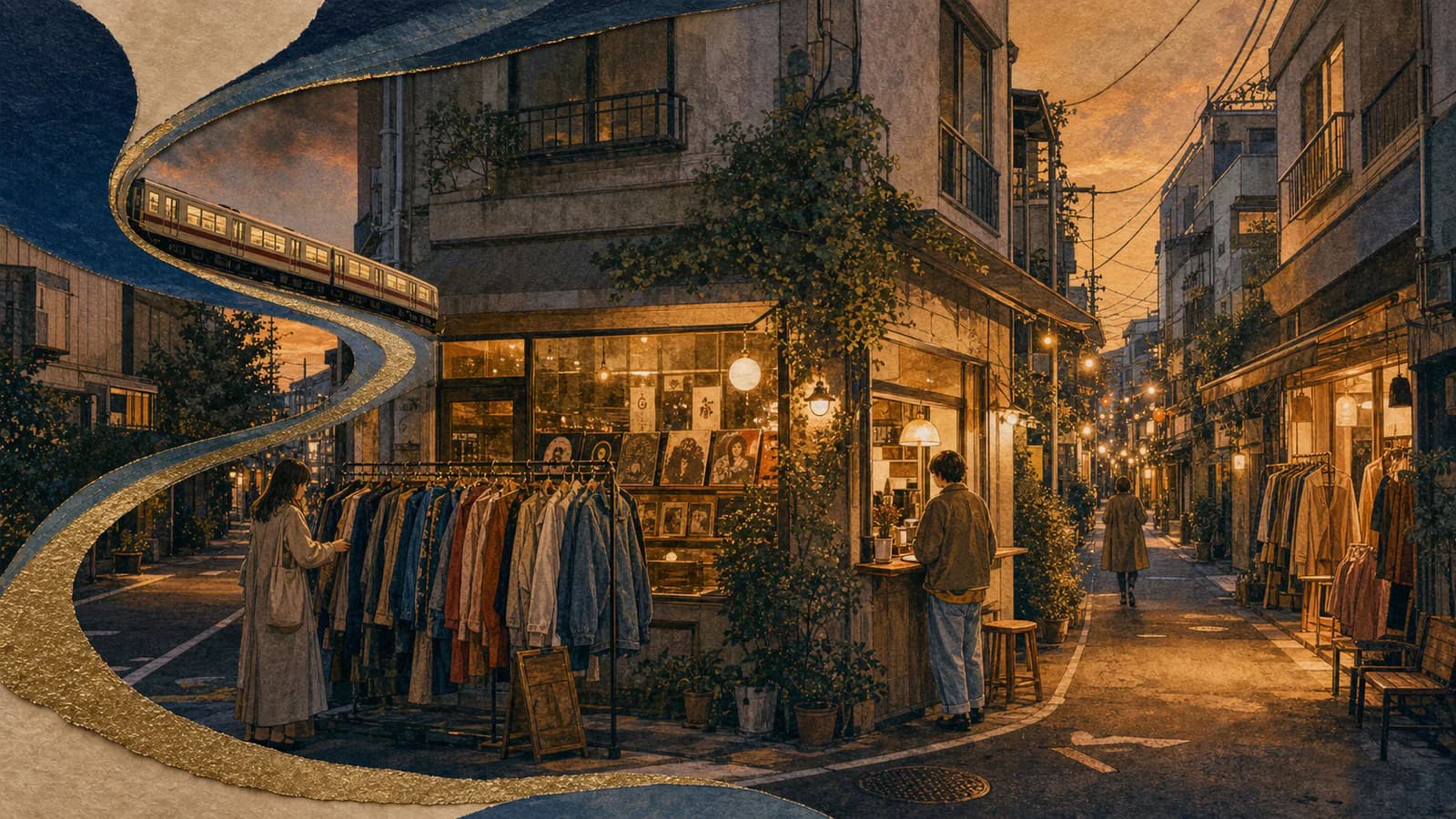
Shimokitazawa is the more polished choice for curated vintage clothing, cafes, small theaters, record shops, and newer pedestrian developments. Koenji feels more compact and local, with vintage streets, live music, small bars, used goods, and a strong counterculture identity.
Neither area is guaranteed to be cheap. Some stores specialize in imported American or European vintage and price items as collectibles. If your goal is low-cost secondhand clothing rather than fashion hunting, compare chain reuse stores and inspect prices before spending the whole afternoon in one shop.
How to reach Shimokitazawa from Ikebukuro
Take the JR Yamanote Line or Tokyo Metro Fukutoshin Line to Shibuya, then change to the Keio Inokashira Line for Shimokitazawa. The complete trip usually takes around 30 to 35 minutes. Shibuya Station is large, so follow Keio Line signs and allow time for the transfer.
Shimokitazawa starts slowly. Many independent shops open around late morning or noon, which makes it better for an afternoon than an early breakfast trip. Begin around the station, then explore the side streets and the areas beneath or beside the redeveloped railway corridor.
How to reach Koenji from Ikebukuro
Take a JR line from Ikebukuro to Shinjuku, then change to the JR Chuo-Sobu local line for Koenji. Rapid Chuo trains do not stop at Koenji on some days and times, so check the platform display instead of boarding only by color.
Koenji's shopping streets extend north and south of the station. The Pal and Look shopping streets on the south side are easy starting points, while smaller vintage and music venues spread into surrounding lanes. Independent businesses may close on weekdays or open in the afternoon.
Shop slowly and check condition before buying
Vintage stores may mix true vintage, recent secondhand items, deadstock, reproductions, and imported clothing. Read labels, check stains, repairs, missing buttons, and sizing, and ask whether fitting rooms are available. Japanese size labels may not match sizes in your home country.
Many small stores request that visitors leave drinks outside and ask before taking photos. Tax-free service is not universal. Carry some cash, use a compact bag, and avoid blocking narrow racks while comparing items.
Add coffee, music, or a local meal
Both neighborhoods work best when shopping is only part of the visit. Shimokitazawa has many specialty cafes, curry restaurants, bookstores, and small performance spaces. Koenji is strong for ramen, independent bars, live houses, and inexpensive local dining.
Live venues often require a separate drink charge in addition to the ticket. Check the start time, age restrictions, payment method, and re-entry rule. For bars, confirm seating charges or minimum orders before sitting down.
A relaxed four-hour plan
Choose Shimokitazawa for curated shopping and cafes, or Koenji for a more local vintage and music atmosphere. Arrive around noon, browse one side of the station, take a cafe break, then explore the opposite side before an early dinner. Save stores on a map, but allow room for places you discover while walking.
Return through Shibuya or Shinjuku to Ikebukuro. Avoid carrying a full day of shopping around Tokyo; HOTEL REFRAIN IKEBUKURO is about one minute from Exit C1 and provides a convenient place to leave purchases before the evening.
Before you go
Opening days, event schedules, live-house rules, and store tenants change frequently. Check official area guides and individual shop pages on the day of travel. Do not expect every viral bargain or limited item to remain available.
Travel times are estimates. Transfers at Shibuya and Shinjuku, weekend crowds, and local events can add time. One neighborhood explored well is usually more satisfying than rushing through both.