Ikebukuro to Asakusa: Train Route, Sensoji, Shops, and a Half-Day Plan
Key takeaway
Asakusa is about 30–35 minutes from Ikebukuro with one easy transfer at Ueno. This English guide explains the train route and recommends Sensoji, Nakamise, Kappabashi, a traditional lunch, and a practical half-day itinerary.
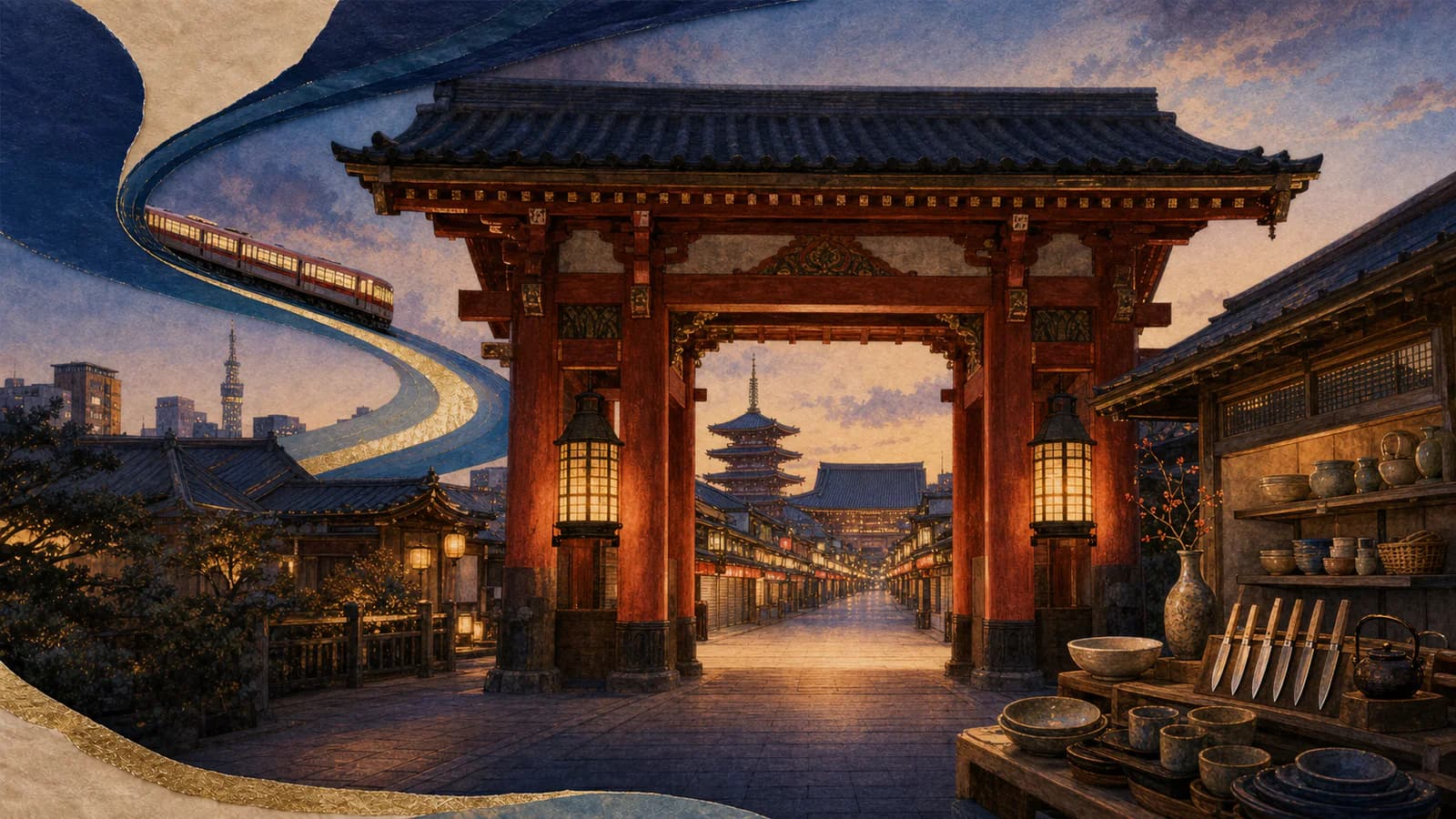
From Ikebukuro by train
About 30–35 minutes
JR Yamanote Line to Ueno → Tokyo Metro Ginza Line to Asakusa
One transfer at Ueno
Station-to-station time is an approximate guide. Add time for the transfer at Ueno and for walking between Asakusa Station, Kaminarimon, Sensoji, and other stops.
The Ikebukuro-base edit
See Sensoji before the biggest tour groups, then walk west to Kappabashi for a version of Asakusa that is more than one famous gate.
- Best for
- Traditional Tokyo, temple photography, kitchenware, classic food
- Suggested departure
- Leave Ikebukuro around 7:30-8:00
- Return shape
- Return between 15:00 and 17:00
- Honest trade-off
- The Ueno transfer and the walk to Kappabashi make this more tiring than the train time suggests.
Why this route works from Ikebukuro
Treat Asakusa Station and Tawaramachi Station as two ends of one walk. Starting at Sensoji and finishing near Tawaramachi avoids retracing the same crowded streets.
Editorial note: this is a practical route judgment, not an operator timetable. Train and facility details are checked against the official links in this guide; always confirm same-day conditions.
The easiest route from Ikebukuro to Asakusa
Take the JR Yamanote Line from Ikebukuro to Ueno, then follow signs for the Tokyo Metro Ginza Line. From Ueno, ride the Ginza Line to Asakusa, the final stop. The journey usually takes about 30 to 35 minutes, depending on the transfer and waiting time.
At Asakusa Station, Exit 1 is convenient for Kaminarimon and Nakamise. The Ginza Line is often the simplest choice because it brings you close to the classic sightseeing area. Asakusa has several stations operated by different railway companies, so check the line name as well as the station name when meeting someone.
Begin at the Asakusa Culture Tourist Information Center
Before entering Kaminarimon, cross the street to the Asakusa Culture Tourist Information Center. The staff can help with maps and local questions, and the free eighth-floor terrace gives you an elevated view over Nakamise, Sensoji, and Tokyo Skytree. It is a useful first stop for understanding the area.
The center is especially helpful if this is your first visit or if weather changes your plan. Opening hours and services may change during maintenance or events, so check the current facility information before you go.
Walk through Kaminarimon and Nakamise to Sensoji
Kaminarimon, with its enormous red lantern, is the traditional entrance to Sensoji. Behind it, Nakamise runs for about 250 meters toward the temple and is lined with roughly 90 shops selling snacks, fans, small crafts, sweets, and souvenirs. It is atmospheric but busy, so keep moving when taking photos and avoid blocking shop entrances.
Sensoji is Tokyo's oldest temple and the center of the neighborhood. The grounds can be visited early, before most shops open, which is one of the best ways to experience the architecture with fewer people. Temple buildings and individual facilities may have different hours.
Shop for knives, ceramics, and food models at Kappabashi
Kappabashi Dougu Street is the best addition for travelers who enjoy cooking, design, or unusual souvenirs. The roughly 800-meter street between Asakusa and Ueno has more than 170 specialist shops selling knives, ceramics, lacquerware, baking tools, restaurant signs, and realistic plastic food models.
Many businesses serve professionals and may close earlier than large shopping centers. Some shops are closed on Sundays or holidays, and knife purchases need careful packing for travel. Check the official shop information and your airline's baggage rules before buying.
Where to eat: a traditional Asakusa lunch
Asakusa has many snack stalls and restaurants, but queues can be long around noon. For a seated meal, Asakusa Mugitoro is a long-established restaurant near the Sumida River serving grated yam with barley rice, set meals, and kaiseki-style dishes. It is a distinctive local option for visitors who want something more traditional than a quick street snack.
Menus, buffet days, prices, reservations, and opening hours vary, so check the official English pages. If you have food allergies or a fixed departure time, contact the restaurant in advance rather than relying only on information from map apps.
A simple five-hour Asakusa itinerary
A practical half-day route is: Ikebukuro to Asakusa, 20 minutes at the tourist information center and terrace, 90 minutes for Kaminarimon, Nakamise, and Sensoji, lunch, then 60 to 90 minutes at Kappabashi or along the Sumida River. Choose Kappabashi for shopping or the river for a slower walk and views of Tokyo Skytree.
If you want fewer crowds, reach Asakusa early and visit Sensoji before shopping. If shopping is the priority, arrive after stores open and visit the temple later. Return via the Ginza Line to Ueno and the JR Yamanote Line to Ikebukuro. HOTEL REFRAIN IKEBUKURO is about one minute on foot from Ikebukuro Station C1 Exit.
Before you go
Travel times are approximate station-to-station estimates. The transfer at Ueno, crowds at Kaminarimon, restaurant queues, weather, and walking time can all change the length of your outing. Check official railway and facility websites on the day of travel.
Asakusa is easiest when you pick one optional extension. Sensoji, Nakamise, Kappabashi, Tokyo Skytree, and a river cruise can fill an entire day together. For a comfortable half-day from Ikebukuro, keep the temple area as the core and add either shopping, food, or the river.