Kamakura and Enoshima from Ikebukuro: A Realistic One-Day Guide
Key takeaway
Kamakura is about 60 to 70 minutes from Ikebukuro on a direct JR Shonan-Shinjuku Line service. This English guide shows how to combine temples, the Great Buddha, the Enoden railway, Enoshima, local food, and sunset without overpacking your day.
From Ikebukuro by train
Kamakura about 60–70 minutes
JR Shonan-Shinjuku Line to Kamakura, then Enoden
Direct to Kamakura on selected trains · Local transfer for Enoshima
Not every southbound train goes directly to Kamakura. Check the destination and route before boarding. Reaching Enoshima and walking around the island adds substantial time and stairs.
The Ikebukuro-base edit
Choose Kamakura or Enoshima as the main chapter of the day; treating both as equal priorities usually turns the coast into a timetable exercise.
- Best for
- Temples, coastal scenery, slower day trips, couples
- Suggested departure
- Leave Ikebukuro around 7:00-7:30
- Return shape
- Return around 19:00 after an early dinner
- Honest trade-off
- Popular local trains, temple closing times, and coastal queues make the day less flexible than the map suggests.
Why this route works from Ikebukuro
For a first trip, start with Kamakura's temples and add Enoshima only if energy and weather are good. On a later visit, reverse the emphasis and give the island the full afternoon.
Editorial note: this is a practical route judgment, not an operator timetable. Train and facility details are checked against the official links in this guide; always confirm same-day conditions.
Take a direct JR train when the timetable works
Selected JR Shonan-Shinjuku Line trains run directly from Ikebukuro to Kamakura in roughly 60 to 70 minutes. Other departures require a transfer, so check a live route planner and confirm that your train continues via Yokohama toward Kamakura. Leave early enough to reach the first temple before tour groups arrive.
An alternative is to travel from Ikebukuro to Shinjuku and use Odakyu services toward Fujisawa or Katase-Enoshima. The Enoshima-Kamakura Freepass can be useful on that route, but it does not cover the direct JR ride from Ikebukuro. Compare convenience and price for your actual itinerary.
Visit central Kamakura before the coast
Begin near Kamakura Station with Komachi-dori and Tsurugaoka Hachimangu, or choose the quieter temple areas in the morning. Komachi-dori is convenient for snacks and souvenirs, but it becomes crowded quickly. Keep food close to the shop where you purchased it and avoid blocking the narrow street.
Do not try to visit every famous temple. A realistic combined day focuses on central Kamakura plus the Hase area, then uses the afternoon for Enoshima. Adding northern Kamakura, a bamboo temple, multiple museums, and the island usually creates more transport than enjoyment.
Pair Hasedera with the Great Buddha
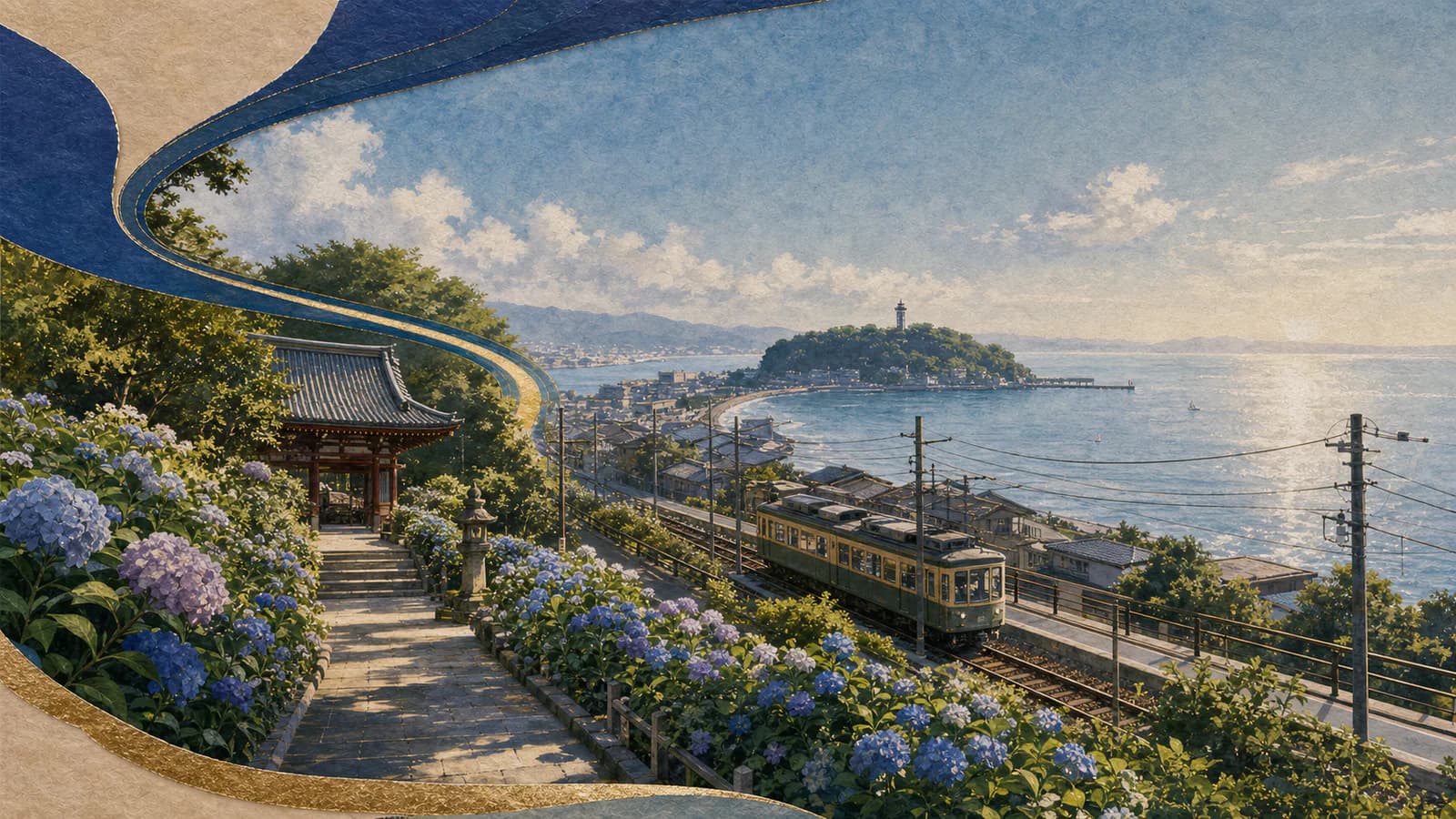
Take the Enoden from Kamakura to Hase. Hasedera is known for its hillside grounds, seasonal flowers, Buddhist statues, and views toward the sea. Nearby Kotoku-in contains the Great Buddha of Kamakura. The two sites are close enough to combine without another train ride.
Both temples have admission hours and may become extremely busy during hydrangea, cherry blossom, and autumn seasons. Respect signs about photography, quiet areas, and restricted buildings. Temple grounds also contain slopes and steps.
Ride the Enoden to Enoshima
Continue from Hase to Enoshima on the Enoden. The small railway is part of the experience, but trains can be packed on weekends. Kamakurakokomae Station is a popular photo location; stay behind barriers, do not enter the road or railway area, and respect nearby homes.
From Enoshima Station, the walk to the island takes around 15 to 20 minutes before the uphill sightseeing begins. The shrine route, Sea Candle, and caves involve many steps and can take several hours. Travelers with limited mobility should check accessibility information and decide in advance how far across the island to go.
Plan food and sunset with closing times in mind
Kamakura and Enoshima are known for seafood, shirasu whitebait, cafes, sweets, and temple-area snacks. Fresh or raw shirasu is seasonal and may be unavailable because of weather or fishing conditions. Ask before ordering if you have seafood allergies or dietary restrictions.
Enoshima is attractive around sunset, but temple ticket desks and some businesses close earlier than the view. Check the sunset time, Sea Candle hours, and your return train before going to the far side of the island. After dark, the walk back to the station can take longer than expected.
A realistic full-day itinerary
Leave Ikebukuro around 7:00 to 8:00, explore central Kamakura in the morning, and have an early lunch. Take the Enoden to Hase for Hasedera and the Great Buddha, then continue to Enoshima in mid-afternoon. On the island, choose the shrine and Sea Candle or a shorter waterfront walk; add the caves only if time and energy allow.
Return via Fujisawa and the JR network, or follow the route recommended by your rail pass. This is a high-step-count day. Carry water, wear supportive shoes, and keep one optional stop that can be removed if trains or meals take longer.
Before you go
Check weather, wind, temple opening times, and live train service. The coast can feel colder and windier than central Tokyo, while summer heat makes the island stairs demanding. Avoid large luggage and bring sun or rain protection.
Travel times in this guide are estimates. Crowded Enoden trains, temple queues, seasonal traffic, and the long walk across Enoshima can substantially change the day. If you prefer slow travel, choose Kamakura or Enoshima rather than forcing both into one visit.